Link
A board game and digital platform package designed to facilitate deeper cultural connection between students of various backgrounds
★ Context
Due to geographic proximity and close international relations, younger generations are increasingly diversifying the demography of Australian communities. Our team was presented with the simple question: How can we encourage deeper understanding between different cultures amongst students?
Our cross-functional team of 3 worked together over 8 weeks to create a physically and digitally interwoven product which encouraged connection between students of different backgrounds.
★ Research
Objectives included understanding:
◦ What facilitates meaningful cultural connection?
◦ What motivates people to engage with others?
◦ What barriers are preventing this meaningful connection from occurring?
We employed triangulation as our methodology approach to cover both exploratory and confirmatory research. This included methods each shaped by the findings before it:
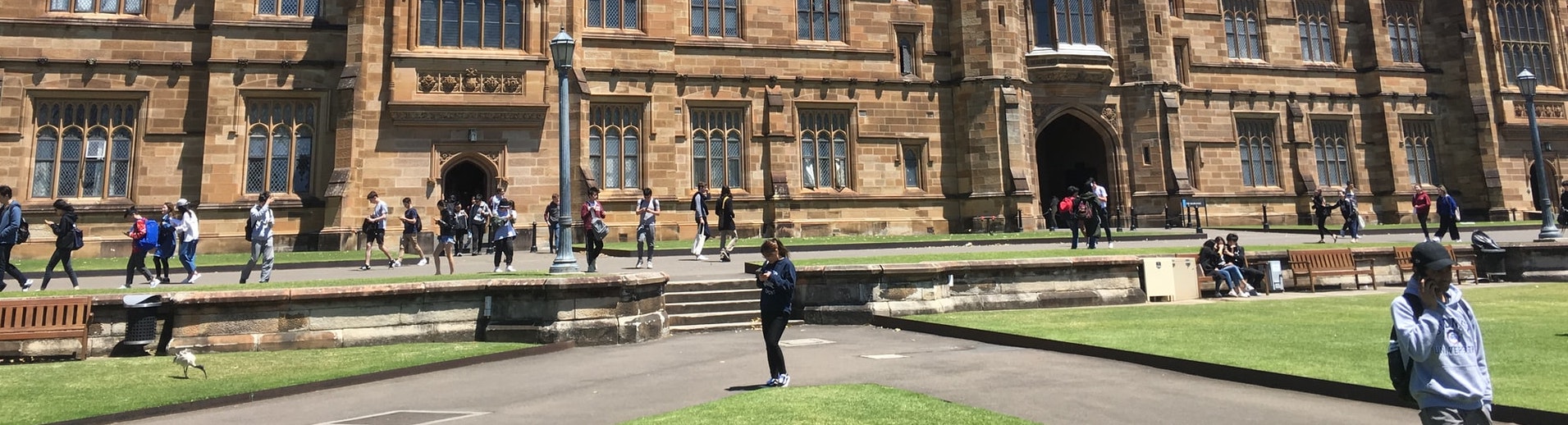
◦ Contextual observation of culturally diverse locations
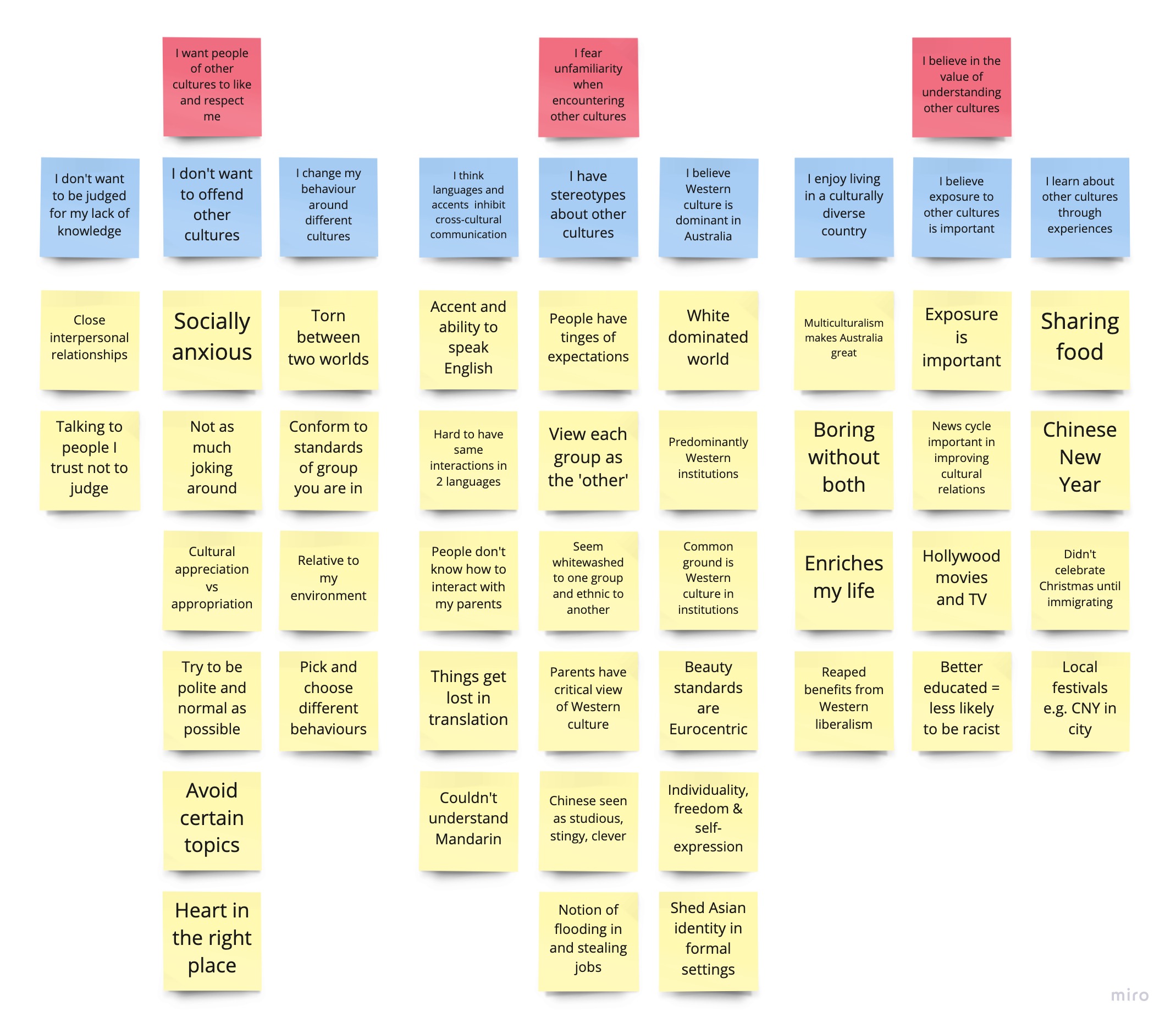
◦ Interviews of participants from various backgrounds
◦ Quantitative questionnaires


Contextual Observation
Affinity Diagram of Interviews
User Personas
Hindering factors preventing cultural connection included:
◦ The lack of time allowed to learn and form genuine long-lasting connections
◦ The credibility of information from third party sources
◦ Fear of unfamiliarity, embarrassment, offense, and judgment for the lack of knowledge
Promoting factors encouraging cultural connection included:
◦ Trust and mutual acceptance between the people forming connections
◦ A ‘Safe’ Space, a judgment-free zone
◦ Similar interests in the same friend group, clique, university club or organisation
◦ Events or sharing tangible experiences
◦ People of colour were motivated by pride in their culture whilst Caucasian Australians were motivated by an enjoyment of a diverse nation
★ Concept
Brainstorming was supplemented with a variety of lateral thinking methods such as forced association in order to maximise quantity of ideas. Sketches of preliminary ideas were drawn, shared and discussed to facilitate ‘back talk’ and encourage new meanings to emerge. The idea of a life-size board game in a public setting that encouraged socialisation through play emerged. Barcodes would be scannable on each tile to a culturally relevant prompt such as ‘Show me a traditional dance in your culture.’


Low fidelity mockup of board game
Low fidelity prototype of corresponding digital platform
★ Iteration
After finalising the concept of a board game and a corresponding app that facilitated socialisation and drawing quick sketches of potential interfaces, we created extreme characters and corresponding storyboards in order to ensure we were satisfying any unique user needs. Low-fidelity prototypes and mockups of both interfaces were then created and another round of informal feedback was gathered.
These low-fidelity prototypes were given to participants who were asked to engage with think-aloud exercises and bodystorming. This physical interaction revealed some design flaws, such as the fact that the game tiles were too small and that a sense of long-term challenge was desired.
Key Findings were:
◦ The tiles are too small and close together. Enlarging the tiles and organising them more widely would create a more immersive experience and make it easier to stand in a spot, as well as more exciting to progress through the game.
◦ Weather and environmental conditions can interfere with participation in the game.
◦ Participants tend to feel embarrassed about performing acts in public.
◦ Location and visibility of the game may need to be reconsidered.
◦ A sense of long-term challenge was desired beyond the temporary nature of the game. Thus, adding a USU point reward system to the accompanying digital interface is a feasible design choice.
★ Final Design
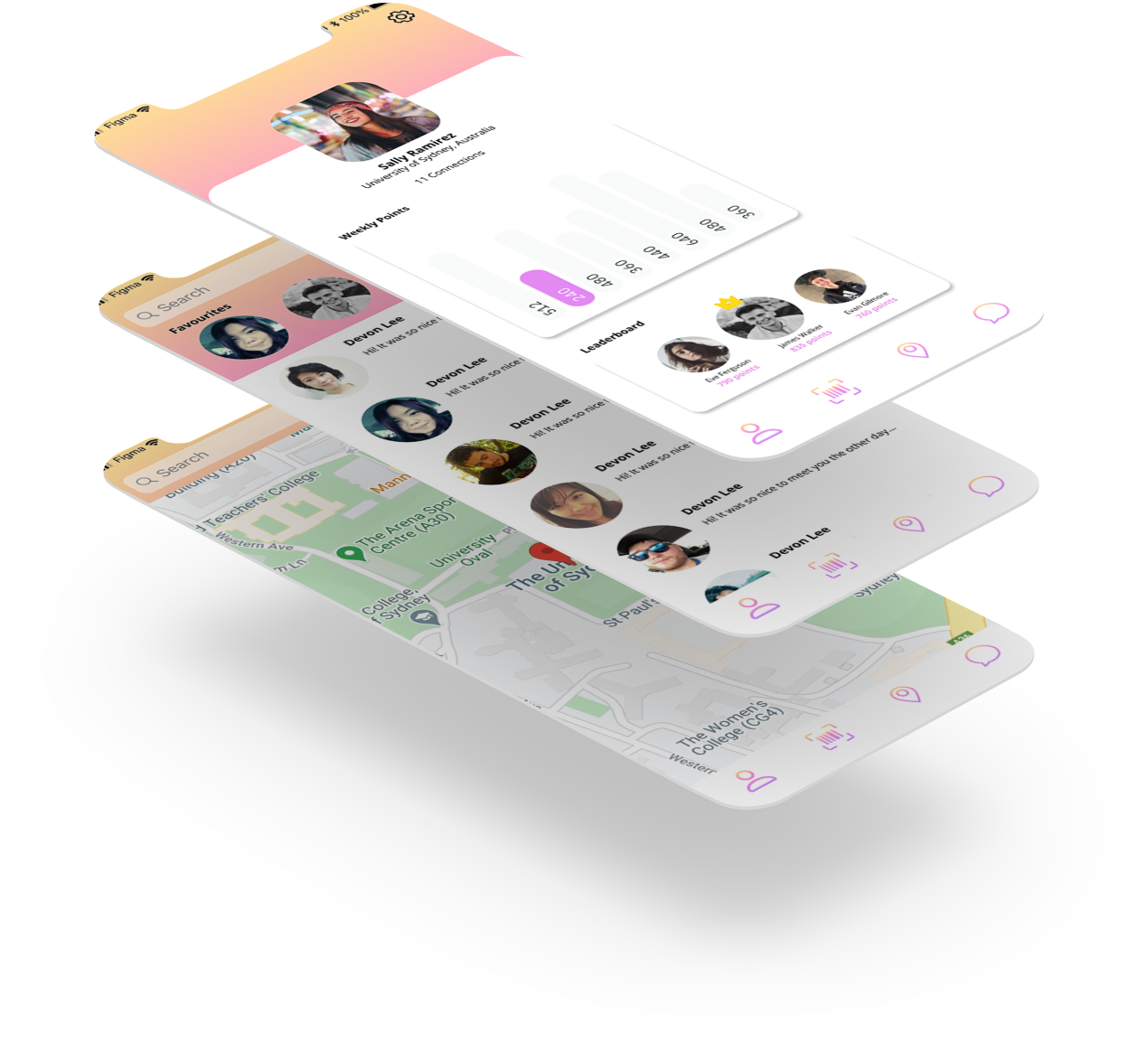
Once again, iterations were implemented according to feedback. Visual design elements were added, personalisation of virtual profiles was improved, and a university rewards point system was implemented to encourage long-term connection.
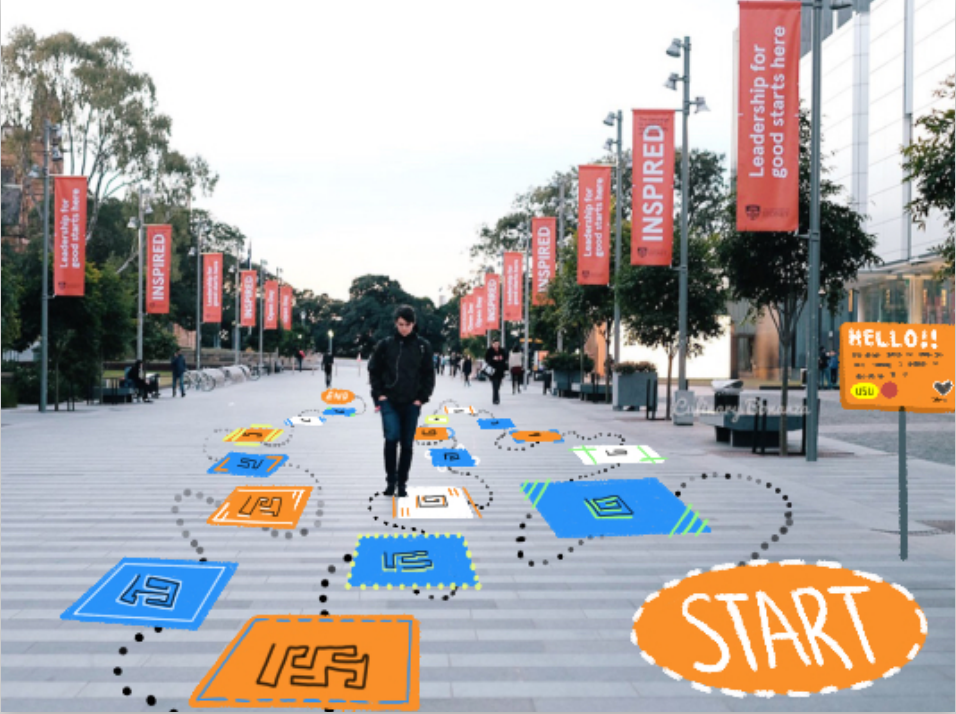
Board game on campus
Corresponding digital platform
★ Learnings
What went well
◦ Effective incorporation of feedbacks throughout the whole design process
◦ Able to overcome time differences and work together as a team despite the unsupportive condition
◦ Users were able to enjoy to enjoy the game, expressing interest and curiosity to try and play the game
Next Steps
◦ Look further into and interact with real-life design precedents like museum interactive displays to further solidify our design solution
◦ Conduct further iterative usability tests in a more appropriate student setting rather than asking strangers to engage who may not be relevant to our demographic
◦ Expand further into other universities and educational institutions
Incorporating more difficult challenges and collaborating with student organisations for personalised rewards